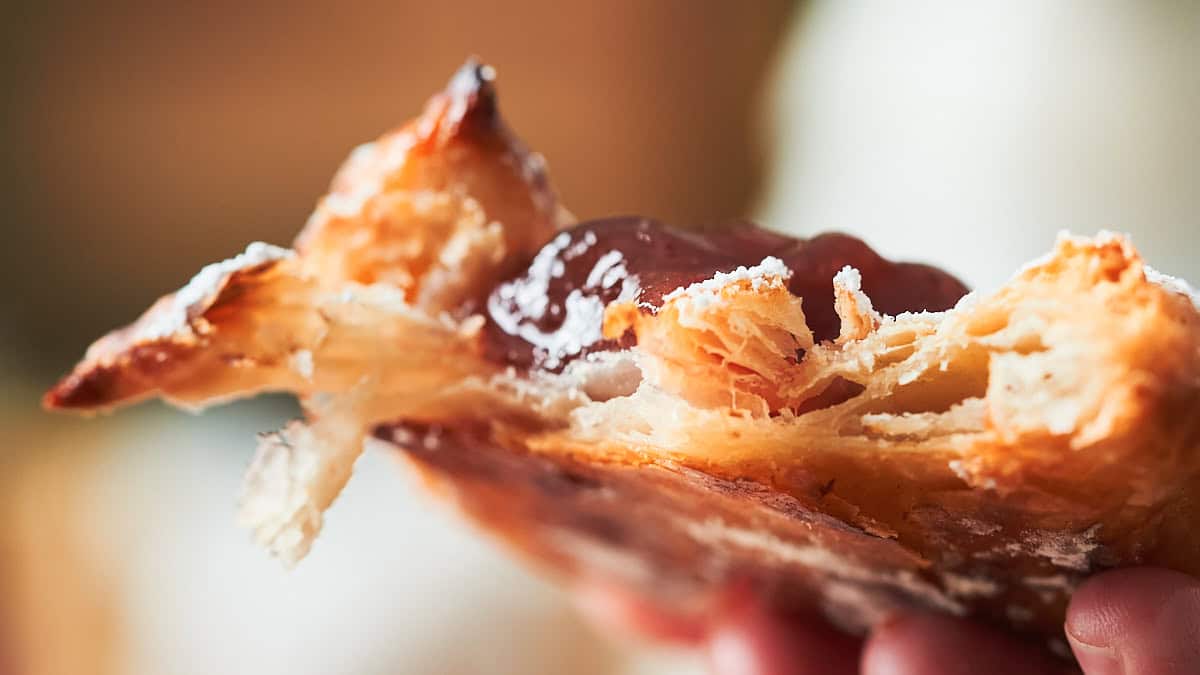
Unlock Flaky Pastry: The Simpler Secret of Rough Puff
For many home bakers, the phrase "homemade puff pastry" conjures images of endless rolling, precise folding, and hours of chilling. It's a culinary Everest that often leads us straight to the freezer aisle for a store-bought shortcut. But what if there was a secret path to that coveted buttery flakiness, one that was not only achievable but genuinely *easy*? Enter rough puff pastry – a game-changer that promises the ethereal layers of puff pastry without the multi-day commitment or the intimidating technique.
If you've been hesitant to tackle laminated doughs, this article will guide you through the simpler, quicker method of making Easy Rough Puff: Quick & Flaky Pastry for Beginners. Prepare to bid farewell to bland, store-bought versions and welcome a new era of homemade flaky goodness into your kitchen!
What Exactly is Rough Puff Pastry? Breaking Down the Flaky Difference
At its heart, rough puff pastry is a close cousin to traditional puff pastry, sharing its characteristic buttery layers and crisp texture. However, the key to its "rough" distinction lies in its preparation. Traditional puff pastry, often hailed as a marvel of French patisserie, involves painstakingly encasing a single, flat slab of butter within a dough, then repeatedly rolling, folding (or "turning"), and chilling. This meticulous process can create hundreds of distinct layers of butter and dough, famously resulting in up to 729 ultra-fine layers after six turns.
Rough puff pastry, on the other hand, embraces a more forgiving approach. Instead of a single, continuous layer, very cold butter is diced or grated and then lightly worked into the flour and water to create a shaggy, non-continuous distribution of butter chunks. When this dough is subsequently rolled and folded, these butter pieces soften and spread, creating pockets that steam during baking, pushing apart the dough layers and resulting in a wonderfully flaky texture.
While rough puff might not achieve the uniform, monumental rise of classic puff pastry, it delivers a remarkably similar and deeply satisfying flakiness. It's often referred to as "quick puff" or "flaky pastry" for its speed and delightful texture. Historically, the line between what we now call "puff" and "rough puff" was far blurrier. Many early recipes for "puff paste" in historical cookbooks, such as Thomas Dawson's The Good Houswifes Jewel (1596) or Eliza Acton's 1845 work, describe a method remarkably similar to rough puff, where butter was added in stages and rolled in. It wasn't until later, around the mid-19th century with chefs like Alexis Soyer, that the single-slab butter lamination became the dominant "modern" technique. So, in essence, when you make easy puff pastry rough puff, you're tapping into a time-honored tradition!
Why Choose Rough Puff? The Benefits for Busy Bakers
The allure of rough puff pastry extends far beyond its historical roots; it offers tangible benefits that make it an irresistible choice for any home baker:
- Unmatched Simplicity for Beginners: If you've ever felt intimidated by elaborate baking projects, rough puff is your entry point. The technique is straightforward, less prone to common mistakes, and doesn't demand the same level of precision or experience as traditional puff pastry. It's genuinely quick and easy to master, promising flaky results every time.
- Significant Time Savings: The most compelling argument for rough puff is its efficiency. Traditional puff pastry can easily take a full day or even spread over several, with numerous chilling periods. Rough puff, by contrast, requires far fewer "turns" and rests. Typically, only two rests are needed: an initial chill for a couple of hours (or more, if you're spreading the work out) and a final 15-minute rest before its ultimate use. This means you can create a batch of incredible homemade pastry in just a few hours from start to finish.
- Superior Flavor and Texture: While it may not have 729 layers, rough puff pastry delivers a buttery, crisp, and incredibly satisfying flakiness that far surpasses most store-bought alternatives. The quality of ingredients, especially good butter, shines through beautifully. Once you experience the difference, you won't want to repurchase pre-made versions. For even more insights into why this method is a game-changer, explore Why Rough Puff Beats Traditional: Flaky Pastry Made Easy.
- Incredible Versatility: This dough is a blank canvas for both sweet and savory creations. From classic apple turnovers and fruit tarts to savory pies, sausage rolls, or an endless supply of cheesy twists, easy puff pastry rough puff provides the perfect foundation.
Mastering the Method: Key Steps to Flaky Success
The beauty of rough puff lies in its uncomplicated process. While specific recipes may vary slightly, the core principles remain consistent:
1. The Right Ingredients & Temperature
Start with high-quality, cold ingredients. Good quality unsalted butter is crucial for flavor and texture. Ensure your butter is diced into small cubes or even grated, and kept *very cold* – straight from the fridge or even briefly in the freezer. Cold water is also key.
Insight: The coldness of the butter is paramount. It prevents the butter from fully incorporating into the dough, ensuring distinct pockets that will create steam and lift during baking. Warm butter will melt into the flour, resulting in a shortbread-like texture rather than distinct layers.
2. Incorporating the Butter
Unlike traditional methods where butter is beaten flat, with rough puff, the cold butter chunks are either lightly rubbed into the flour mixture or mixed in until the dough has a shaggy appearance. The goal isn't to create a smooth, homogenous dough, but rather to keep visible pieces of butter scattered throughout.
3. The Folding and Turning (Fewer, Simpler Turns!)
This is where the magic happens, and where rough puff truly shines in its simplicity. After the initial mixing, the dough is typically rolled into a rectangle, folded into thirds (like a letter), rotated 90 degrees, and then rolled out again. This is one "turn." You'll repeat this process only a few times (often 3-4 turns in total, far fewer than traditional puff pastry's 6-8). Each turn helps distribute and flatten the butter pieces, building the layers.
4. Crucial Resting Periods
Don't skip the rests! These are essential for two reasons:
- Relaxing the Gluten: Rolling stretches the gluten in the flour, making the dough elastic and difficult to work with. Resting allows the gluten to relax, making subsequent rolling much easier.
- Chilling the Butter: Resting also ensures the butter remains cold and firm. If the butter gets too warm, it can melt into the dough, compromising the flakiness.
The first significant rest usually occurs after 1-2 turns, typically for at least 2 hours in the refrigerator, but it can be left longer, even overnight or for a couple of days if you wish to break up the process. Subsequent rests between turns are often shorter, around 15-30 minutes.
Practical Tip: When rolling, always roll in one direction, from the center outwards, and try to maintain an even thickness. Avoid pressing down too hard, which can squeeze out the butter.
To get started with a foolproof recipe, check out our guide on Easy Rough Puff: Quick & Flaky Pastry for Beginners.
Beyond the Basics: Creative Uses and Storage Tips
Once you've mastered this versatile dough, a world of culinary possibilities opens up:
Sweet Delights:
- Apple Turnovers: A classic for a reason, the flaky pastry perfectly complements sweet fruit fillings.
- Fruit Tarts & Galettes: Use it as a rustic base for seasonal fruits.
- Palmiers: Roll with cinnamon sugar for delicate, crispy "elephant ears."
- Puff Pastry Pinwheels: Fill with chocolate spread, jam, or nuts and bake.
Savory Sensations:
- Sausage Rolls: A British classic, perfect for picnics or parties.
- Mini Quiches or Tartlets: Create individual portions with your favorite savory fillings.
- Pot Pie Topping: A gloriously flaky lid for any creamy stew.
- Cheesy Twists: Simple, addictive, and great with soups or salads.
- Savory Tarts: Top with caramelized onions, goat cheese, and herbs for an elegant appetizer.
Storage Solutions:
One of the fantastic aspects of making easy puff pastry rough puff is that you can prepare it in advance. Most recipes yield a generous amount (often two 1lb portions). Wrap portions tightly in plastic wrap, then an airtight container or freezer bag. It will keep in the refrigerator for 2-3 days or in the freezer for up to 3 months. Thaw frozen dough in the refrigerator overnight before using. This allows you to have homemade flaky pastry ready whenever inspiration strikes!
Embrace the Flake: Your Rough Puff Journey Awaits!
Ditching the store-bought pastry for a homemade alternative doesn't have to be a daunting task. Rough puff pastry is proof that you can achieve stunning, delicious results with a simpler, quicker method. It's a fantastic technique for beginners, offering the rich, buttery flakiness you crave without the culinary acrobatics of traditional puff pastry. So, gather your cold butter, clear your counter, and embark on your flaky pastry journey. Once you experience the golden, crisp layers of your own easy puff pastry rough puff, you'll wonder why you ever settled for anything less.
